
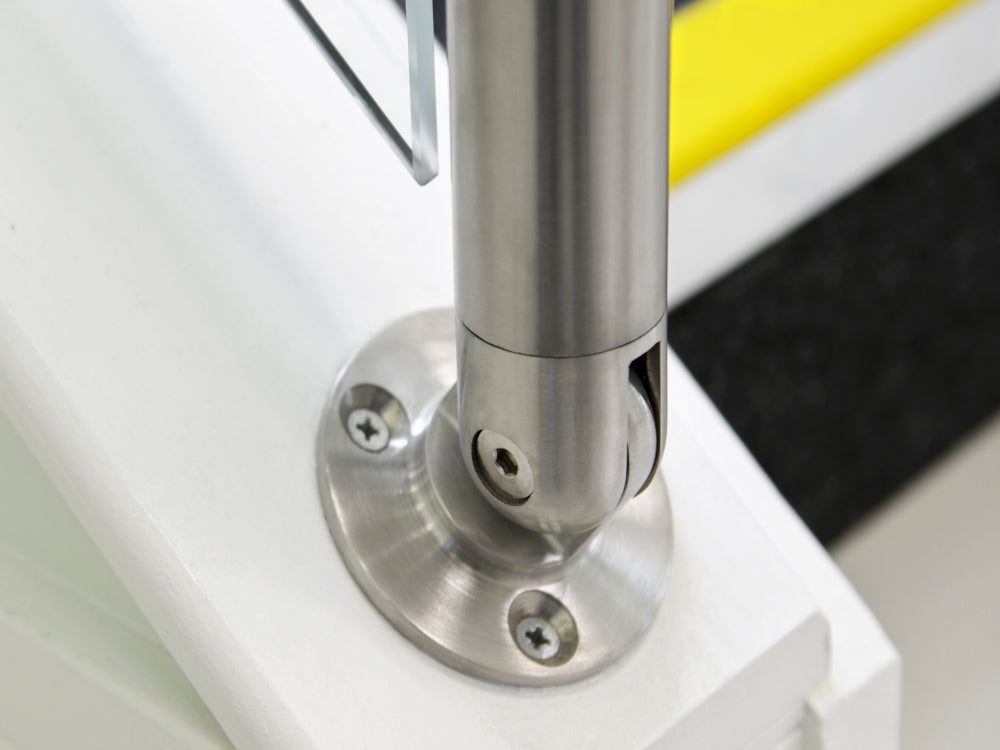
When installing a balustrade or handrail system, one of the most important decisions you’ll make is how the structure will be mounted. A secure, long-lasting installation starts with choosing the correct support - and in most cases, that comes down to two essential components: base plates and wall brackets.
Although both serve the same purpose, to keep your balustrade or handrail safely in place, they’re designed for completely different scenarios. Understanding the strengths of each option will help DIY customers achieve professional results and allow trade experts to select the right combination for each project.
What Are Base Plates?
Base plates are flat, load-bearing plates used to anchor balustrade posts to horizontal surfaces such as concrete, timber decking or tiled floors. They are the foundation of a free-standing balustrade system and play a key role in distributing weight and resisting lateral forces.
A high-quality base plate provides stability and prevents posts from shifting, tilting or loosening over time. This is especially important in high-traffic areas or outdoor installations that are exposed to wind, moisture or footfall pressure.
When Should You Use Base Plates?
Base plates are ideal when the structure needs to be securely fixed to the ground or a horizontal surface. They are commonly used for:
- Glass balustrades on balconies and terraces
- Free-standing sections of railing
- Decking installations
- Commercial walkways or stair landings
- Raised platforms and mezzanines
They are particularly effective where wall support isn’t available and the balustrade must sustain pressure from multiple directions. A reliable base plate combined with sturdy balustrade posts ensures long-term performance and compliance with UK safety standards.
What Are Wall Brackets?
Wall brackets are used to attach handrails or support rails directly to a vertical surface. Unlike base plates, which anchor posts to the floor, wall brackets create a “floating” handrail effect that’s ideal for narrow spaces, staircases, hallways and areas where posts would be intrusive.
A good wall bracket provides a secure fixing point while maintaining a clean, minimal look. Modern bracket designs offer excellent load capacity and come in a variety of finishes to match stainless steel, glass or mixed-material installations.
Explore DC Iron’s full collection of strong and stylish wall brackets designed for staircases, walkways and interior or exterior walls.
When Should You Use Wall Brackets?
Wall brackets are the best choice when a handrail can be fixed directly to a wall or supporting structure. They work perfectly for:
- Staircases and stairwells
- Hallways with limited space
- Walkways and ramps
- Internal handrail runs in commercial buildings
- Bathrooms, utility areas or public access routes
They are especially useful for DIY installers because they require fewer components and no free-standing posts. Wall brackets also help create a sleek, compact appearance - perfect for modern homes and clean architectural styles.

Choosing the Right Fixing Method: Floors, Walls and Decking
The mounting surface plays a huge role in selecting the correct system, whether you're attaching posts or handrails.
Fixing to Concrete Floors
Concrete offers excellent support for base plates. Using the correct anchors and stainless steel fixings ensures a secure, long-lasting connection. This is the preferred choice for commercial builds, balconies and external staircases.
Fixing to Timber Decking
Decking requires extra care. Base plates must be secured into structural joists beneath the boards, not just the decking surface. Selecting wider plates or reinforced models ensures a safer installation.
Fixing to Walls
Wall brackets must be anchored into solid material such as brick, concrete or timber studs. Suitable fixings prevent movement and ensure the handrail remains secure under load.
By choosing the right bracket or plate for your surface, you guarantee stability and compliance with UK building standards.
Base Plates or Wall Brackets - Which Should You Choose?
If your railing or balustrade needs to stand independently, base plates and posts are essential. If a supporting wall is available and space is tight, wall brackets offer a practical and stylish alternative. Many professional installations use a combination of both - for example, posts with base plates on landings and wall brackets on the stairs.
Whichever mounting system you choose, ensure the components match in style, finish and grade to achieve a polished, professional finish.
DC Iron supplies high-quality, reliable mounting solutions engineered to support balustrades, handrails and modern architectural designs with confidence.