
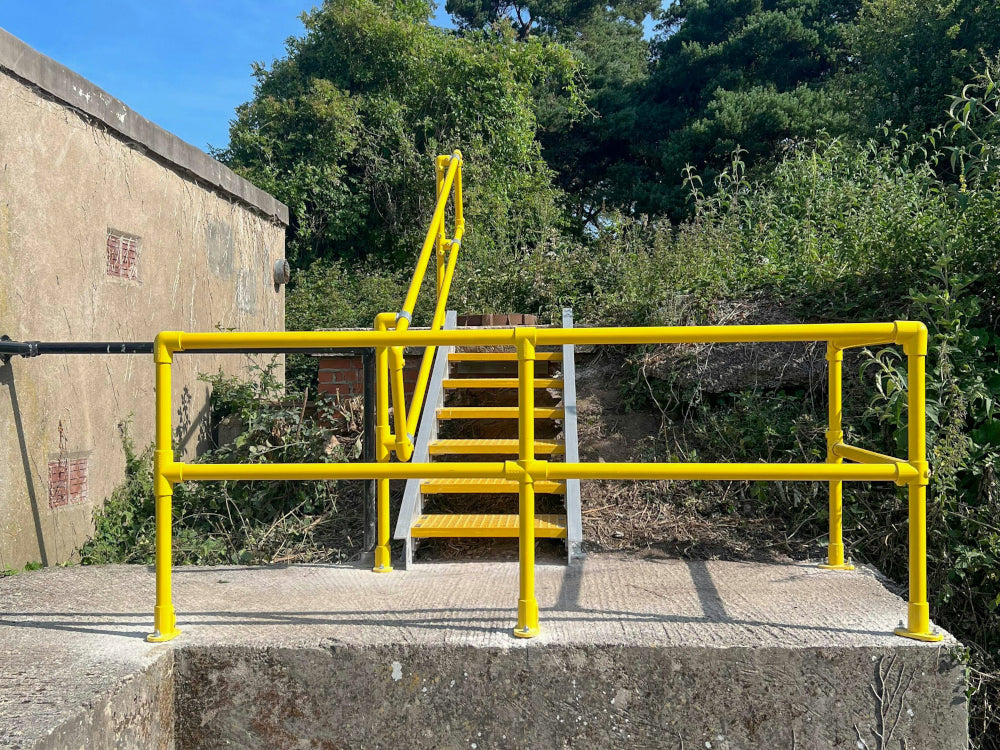
Coloured key clamps have become an increasingly popular choice for handrails, guard rails, playgrounds, schools, sports facilities and public spaces. They offer the same versatility and strength as standard key clamps while adding an attractive coloured finish that can complement branding, improve visibility or simply create a more modern appearance.
One of the biggest advantages of key clamp systems is that they are designed to be assembled without welding, making them easy to modify or dismantle. This often leads customers to ask whether coloured key clamps can be reused after being removed from an existing installation.
The simple answer is yes, in most cases they can. However, there are several factors that should be considered before reinstalling them. Understanding how coloured key clamps perform over time and what to inspect before reuse will help ensure your next installation remains safe, secure and long-lasting.
How Key Clamp Systems Are Designed
Key clamps are mechanical fittings that secure to steel tube using recessed grub screws. Unlike welded connections, the fittings can be loosened and removed without damaging the surrounding tube.
This modular design allows structures to be dismantled, reconfigured or expanded as requirements change. Whether you are relocating a handrail, modifying a safety barrier or extending an existing structure, key clamps provide excellent flexibility.
Coloured key clamps use the same connection method as galvanised fittings, meaning their ability to be reused is generally unaffected by the coloured coating itself.
When Can Coloured Key Clamps Be Reused?
In many situations, coloured key clamps can be reused multiple times without affecting their performance.
If the fitting has not been subjected to excessive impact, corrosion or physical damage, it can often be removed and installed elsewhere with little preparation.
This makes coloured key clamps particularly attractive for temporary structures, modular safety barriers, exhibition spaces, sports facilities and projects where layouts may change in the future.
For professional installers, the ability to reuse fittings can also reduce material costs on refurbishment and alteration projects.
Inspect the Fitting Before Reusing It
Although coloured key clamps are designed for long service life, every fitting should be carefully inspected before being reused.
The casting should be checked for cracks, distortion or signs of impact damage. Even minor fractures can reduce the strength of the fitting and should not be ignored.
The threaded holes should also be inspected to ensure the grub screws tighten correctly and have not become stripped through repeated use or overtightening.
If the fitting shows significant wear or damage, replacement is usually the safest option.

Check the Protective Coating
The coloured finish does more than improve appearance. It also provides an additional layer of protection against weather and corrosion.
Before reinstalling a coloured key clamp, inspect the coating for deep scratches, chips or areas where the underlying metal has become exposed.
Minor cosmetic marks usually have little effect on performance, particularly in indoor environments. However, if large sections of coating have been damaged and the fitting will be used outdoors, corrosion may begin to develop over time.
Replacing heavily damaged fittings helps maintain both the appearance and durability of the finished installation.
Inspect the Grub Screws
The grub screws are one of the most important parts of any key clamp fitting.
Each screw should turn freely and tighten securely without excessive resistance. Rounded hex sockets, damaged threads or signs of corrosion may indicate that the screw should be replaced.
Fortunately, replacement grub screws are readily available for many key clamp systems, allowing the fitting itself to continue being used.
Replacing worn screws is often more economical than replacing the entire fitting.
Check the Steel Tube as Well
Reusing the fitting is only part of the inspection process. The steel tube it connects to should also be assessed.
Old tube may show signs of corrosion, dents, excessive wear or deformation where previous fittings have been installed.
If the tube has become damaged or weakened, simply fitting a reused key clamp will not restore the structural integrity of the installation.
Inspecting both the fittings and the tube ensures the completed structure remains safe and stable.
Can Reused Key Clamps Be Used Outdoors?
Yes, provided they remain in good condition.
Many coloured key clamps continue to perform well outdoors after being reused, particularly if they have been properly maintained and the protective coating remains largely intact.
Where fittings have been exposed to harsh coastal environments, industrial pollution or prolonged weathering, more detailed inspection is recommended before reuse.
If there is any doubt about the condition of a fitting that will form part of a safety-critical installation, replacing it is always the better option.
When Should You Replace Rather Than Reuse?
Although key clamps are designed for long-term use, there are situations where replacement is advisable.
Fittings that have cracked, become heavily corroded or suffered significant impact damage should not be reused.
Similarly, fittings with damaged threads or grub screw sockets that no longer tighten correctly may not provide the secure connection required.
For handrails, guard rails and other safety-critical structures, reliability should always take priority over attempting to reuse worn components.
The Benefits of Reusing Key Clamps
When fittings remain in good condition, reusing them offers several advantages.
It reduces material costs, minimises waste and allows existing installations to be modified without replacing every component.
This flexibility is one of the reasons key clamp systems are widely used across commercial, industrial and public sector projects where future alterations are often expected.
For DIY users, reusable fittings also make future home improvements much simpler, allowing handrails, barriers and other structures to be expanded or reconfigured without specialist welding equipment.
Making the Right Decision for Your Project
Coloured key clamps are designed to provide many years of reliable performance, and in most cases they can be reused successfully after careful inspection.
Checking the casting, protective coating, grub screws and steel tube before reinstallation helps ensure the fitting continues to perform safely and effectively.
Whether you are modifying an existing handrail, relocating a safety barrier or building a completely new structure, understanding when a coloured key clamp can be reused allows you to make informed decisions while maintaining both safety and long-term durability.