
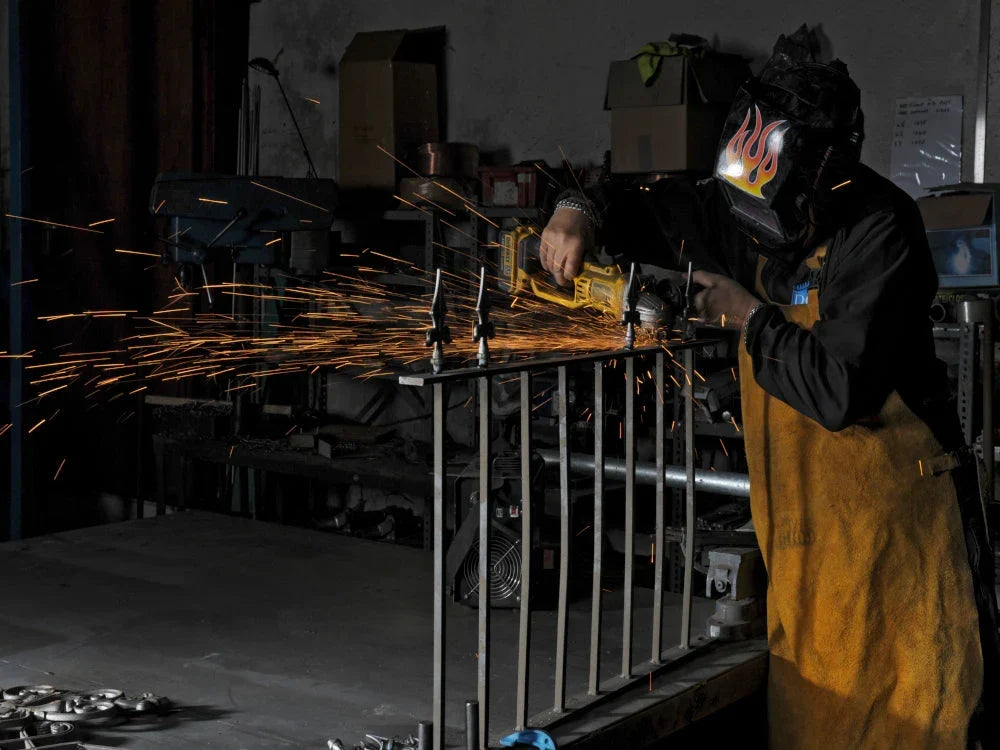
Weld distortion is one of the biggest challenges in metal fabrication. Even when welds are structurally sound, excessive heat can cause steel to expand, contract and move, leaving finished components twisted, bowed or out of square. For projects such as gates, railings, frames and structural fabrications, even a small amount of distortion can create significant fitting problems and increase the amount of rework required.
Professional fabricators understand that preventing distortion is far easier than correcting it afterwards. By planning welds carefully, controlling heat input and using the right fabrication techniques, they can produce straighter, more accurate components while reducing wasted time and materials.
Whether you're fabricating a simple gate frame or a complex steel structure, these principles will help improve both the quality and efficiency of your work.
Why Weld Distortion Happens
Steel expands as it heats up and contracts again as it cools. During welding, the area immediately around the weld reaches extremely high temperatures while the surrounding material remains relatively cool.
As the weld cools, the metal contracts. Because this contraction is rarely uniform across the entire component, stresses develop that can pull sections out of alignment. The longer the weld, the thicker the material and the greater the heat input, the more noticeable this movement can become.
Understanding that distortion is caused by uneven heating rather than poor welding technique alone allows fabricators to focus on preventing the problem before welding begins.
Start With Accurate Preparation
Professional fabrication starts long before striking an arc.
Poorly prepared components often require additional force to pull them into position before welding, introducing stress that can cause movement as the weld cools. Accurate cutting, clean edges and well-fitted joints reduce the need for excessive weld material while helping components remain correctly aligned.
Taking the time to prepare materials properly also produces more consistent welds and reduces unnecessary heat input throughout the fabrication process.
Use Strong Clamping and Jigs
One of the simplest ways to minimise distortion is to prevent movement during welding.
Professional fabricators use clamps, magnetic squares, fabrication tables and purpose-built jigs to hold components securely while they are welded. This keeps sections square and reduces the amount of movement caused by thermal expansion and contraction.
For businesses producing repeat work, fabrication jigs provide the added benefit of maintaining consistent dimensions across multiple projects while improving productivity.
Don't Weld Everything in One Go
One of the most common mistakes made by inexperienced fabricators is completing a long weld in a single continuous pass.
This concentrates heat into one area of the workpiece, increasing the likelihood of distortion.
Instead, professional welders often use staggered welding sequences, alternating between different parts of the fabrication to allow heat to dissipate more evenly. Tack welds are also used extensively to hold components in position before the final welds are completed.
This balanced approach significantly reduces the stresses created during cooling.
Control Heat Input
Heat is the primary cause of weld distortion, so controlling it is essential.
Using the correct welding parameters, avoiding excessive weld sizes and selecting an appropriate travel speed all help minimise unnecessary heat entering the material. Larger welds are not always stronger, and over-welding often creates more problems than it solves.
Professional fabricators aim to produce welds that meet the required structural strength without introducing excessive heat into the surrounding steel.
Think About Weld Sequence
The order in which welds are completed can have a significant impact on the finished fabrication.
Rather than welding one side completely before moving to another, experienced fabricators often alternate between opposite sides of a frame or structure. This helps balance the stresses created during cooling and reduces the tendency for components to twist or pull in one direction.
Symmetrical welding sequences are particularly important when fabricating gate frames, railings and box section structures where maintaining accurate dimensions is essential.
Choose the Right Steel Sections
The material being welded also influences how much distortion occurs.
Thinner steel sections naturally heat up and cool down more quickly, making them more susceptible to movement. Larger sections generally offer greater rigidity, although they also require more heat to achieve proper penetration.
Selecting appropriate steel box section, tube or flat bar for the intended application helps create fabrications that are easier to weld while maintaining dimensional accuracy.
Good design can also reduce distortion by ensuring loads are distributed evenly throughout the finished structure.
Check Alignment Throughout the Fabrication
Professional fabricators do not wait until the final weld has been completed before checking their work.
Regularly measuring diagonals, checking for square and confirming alignment throughout fabrication allows small adjustments to be made before distortion becomes difficult to correct.
Catching minor movement early is far quicker than attempting to straighten a fully welded frame after fabrication has been completed.
Good Design Helps Prevent Distortion
The design of a fabrication can play just as important a role as the welding itself.
Well-designed components minimise long unsupported spans, distribute loads evenly and allow welds to be positioned where they generate the least movement. Features such as braces, gussets and additional supports can also improve rigidity while reducing the likelihood of distortion during fabrication.
Thinking about manufacturability during the design stage often produces stronger, more accurate fabrications while reducing production time.
Quality Materials Make a Difference
Consistent, accurately manufactured steel is easier to fabricate than poor-quality material with excessive tolerances or inconsistent dimensions.
Using high-quality box section, steel tube and flat bar helps ensure components fit together correctly before welding begins, reducing the need for force, adjustment and excessive weld material.
Combined with good fabrication practices, quality materials help achieve straighter, more professional results.
Build Straighter Fabrications with DC Iron
At DC Iron, we supply a comprehensive range of steel box section, steel tube, flat bar and fabrication components trusted by professional metalworkers across the UK. Whether you're manufacturing gates, railings, structural frames or bespoke fabrications, our high-quality materials provide the consistency and reliability needed to achieve accurate results.
While some weld distortion is unavoidable, careful preparation, controlled welding techniques and quality materials can dramatically reduce its impact. Professional fabricators understand that producing straight, accurate fabrications is rarely about correcting mistakes afterwards. It's about preventing them from happening in the first place.