
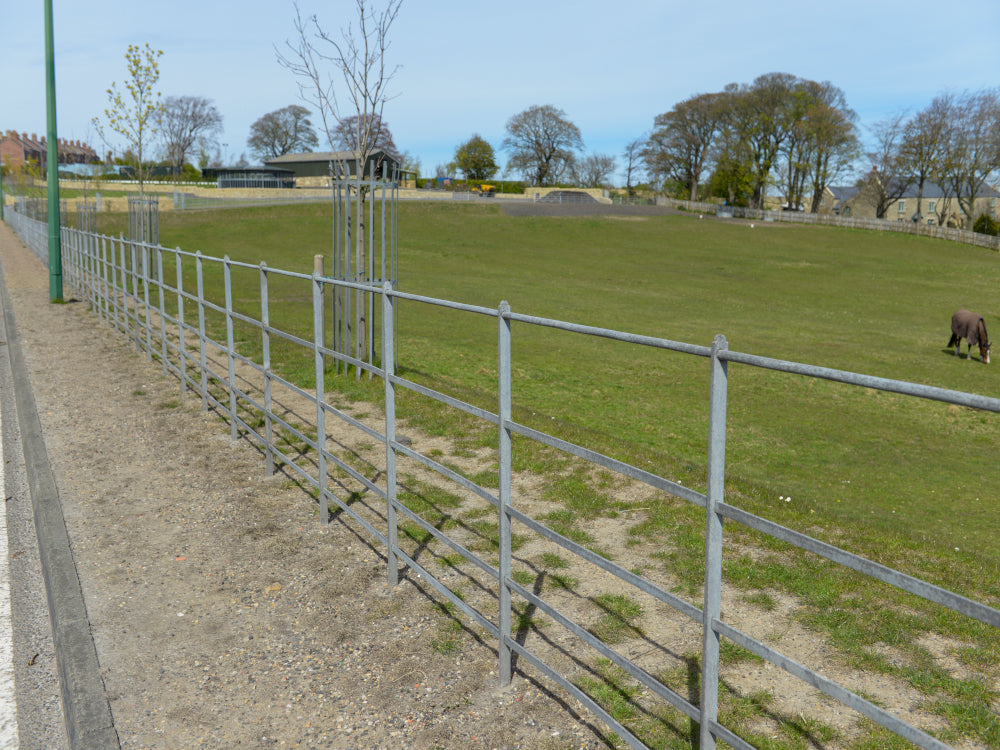
A leaning fence post is one of the most common problems homeowners, contractors and property managers encounter. While it may start as a slight movement that's barely noticeable, it rarely stays that way. Over time, leaning posts can place additional strain on fence panels, gates and fixings, eventually leading to expensive repairs or complete replacement.
Many people assume the post itself is to blame, but in reality there are several reasons why fence posts begin to lean. Ground conditions, installation methods, drainage and even the weight of the fence can all contribute to the problem.
Understanding why fence posts lean is the first step towards preventing it from happening again.
Poor Foundations Are the Most Common Cause
The majority of leaning fence posts can be traced back to inadequate foundations. A fence post relies on a solid base to resist both the weight of the fence and the constant pressure created by wind.
If the foundation is too small, too shallow or poorly compacted, the post has very little resistance against movement. Over time, even small amounts of movement gradually become larger until the fence noticeably leans.
In the UK, fence posts should generally be installed deep enough to provide adequate stability while taking account of the height and weight of the fence. Larger or heavier fencing systems often require deeper foundations than lightweight decorative fencing.
Soft or Waterlogged Ground
Ground conditions play a significant role in fence stability.
Clay soils, loose ground and areas with poor drainage are particularly susceptible to movement. During wet weather, saturated soil loses much of its strength, allowing fence posts to shift under load. As the ground dries and contracts again, the movement can become permanent.
Repeated cycles of wet and dry weather gradually loosen the post until it begins to lean.
If your property suffers from poor drainage, improving water runoff around the fence line can often prevent future movement before it becomes a serious problem.

Wind Loading Is Often Underestimated
Fence posts are subjected to significant forces during strong winds, particularly when supporting solid fence panels.
Every gust acts like pressure against a sail. That force is transferred directly into the fence posts and their foundations. Over months and years, repeated loading gradually weakens the surrounding ground or causes slight movement within the concrete foundation.
Taller fences and fully boarded panels experience much greater wind loading than open-style fencing that allows air to pass through.
Where properties are located in exposed coastal or rural areas, selecting stronger metal fence posts and ensuring adequate foundation depth becomes even more important.
The Wrong Fence Post for the Job
Not every fence post is suitable for every installation.
Posts that are too small for the height or weight of the fence may flex over time, placing additional stress on both the fixing points and the surrounding foundations. Timber posts can also weaken through moisture, insect damage or natural decay, making them increasingly vulnerable to movement.
Steel fence posts offer significantly greater strength and durability, particularly for heavier fencing systems or areas exposed to challenging weather conditions. They are less susceptible to rot, warping and long-term structural deterioration, making them a popular choice for both domestic and commercial installations.
Incorrect Installation Can Cause Problems Years Later
Fence posts often appear perfectly straight immediately after installation, even if mistakes have been made below ground.
Common installation errors include failing to compact the base properly, using insufficient concrete, positioning the post out of plumb or allowing the concrete to cure before the post has been fully aligned. These issues may not become visible for months or even years.
Taking time during installation to prepare the ground correctly and ensure each post is accurately positioned will significantly increase the lifespan of the entire fence.
Heavy Gates Add Extra Pressure
If a gate is attached directly to a fence post, the post must support far more than the weight of the fence itself.
Every time the gate is opened or closed, additional forces are transferred into the post. Large timber gates, composite gates and metal gates can place considerable stress on poorly supported posts, particularly if the hinges are not correctly adjusted.
Using purpose-designed gate posts and high-quality adjustable hinges helps distribute these forces more effectively while reducing long-term movement.
How to Prevent Fence Posts Leaning
Preventing movement starts long before the fence is installed.
Selecting appropriately sized posts, preparing solid foundations and ensuring adequate drainage all contribute to a stronger, longer-lasting installation. Choosing high-quality steel fence posts also reduces many of the maintenance issues associated with traditional timber posts.
Regular inspections are equally important. Small amounts of movement are much easier to correct before they place additional stress on fence panels, rails and gates.
If you notice early signs of leaning, addressing the underlying cause promptly can often prevent far more extensive repairs later.
Choose Quality Fence Components from DC Iron
At DC Iron, we supply a wide range of high-quality metal fence posts and panels, estate fencing, gate hardware and fabrication components designed to provide strength, durability and long-term performance. Whether you're installing new fencing or replacing damaged components, our products are built to withstand the demands of the British climate.
By choosing the right materials and installing them correctly from the outset, you can build fencing that remains secure, stable and attractive for many years to come.