
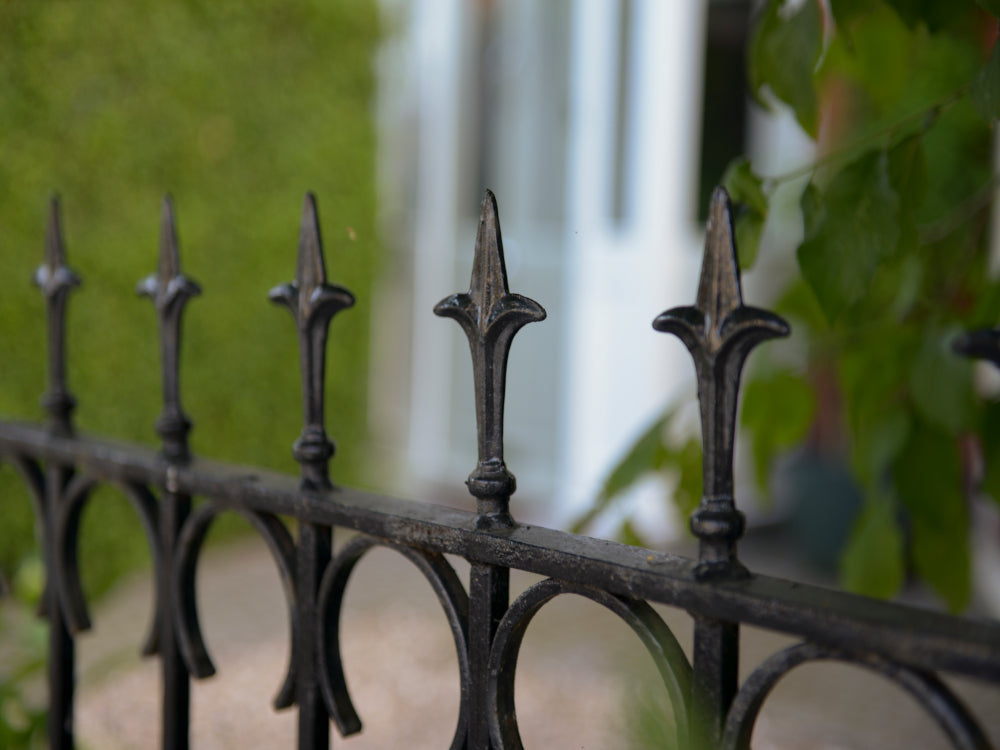
Railheads are one of the most recognisable features of wrought iron fencing. They define the style of the fence, add height and presence, and in many cases improve security. Over time, however, railheads can become rusted, loose or broken, or you may simply want to update an old design. The challenge is removing and replacing them without harming the existing bars or panels.
Whether you are a professional fabricator or a confident DIY enthusiast, this guide explains how to safely remove old railheads and fit new ones while keeping the fence intact.
Why Railheads Fail or Need Replacing
Railheads are often the first part of a fence to show wear. They sit at the very top, exposed to rain, frost and occasionally impact. Paint eventually breaks down, rust forms, or welds weaken. In older fences, railheads may have been cast in brittle metal that deteriorates over decades.
Some homeowners replace railheads simply for style reasons. A fence fitted with standard spearheads can be transformed by switching to fleur-de-lis or gothic designs. Upgrading only the tops is far more cost-effective than replacing the entire fence, provided the bars are still structurally sound.
Assessing the Fence Before You Begin
Before removing anything, check that the bars and the top rail are in good condition. If the vertical bars are heavily rusted, bent or splitting, it may not be worth replacing the railheads alone. For most fences, however, the bars remain strong even after years of use.
Look closely at how the original railheads are fixed. Some are welded directly onto the bars, while others are fitted over the top and secured with a small weld. On older fences you may find cast heads fixed with lead or set into a socket.
Understanding the fixing method helps you choose the best way to remove the old head without damaging the metal underneath.
Removing Welded Railheads Safely
If the railheads are welded, removal must be done carefully. A small grinder with a thin cutting disc is the most effective tool. Work slowly around the weld until the head loosens. Try to remove only the weld material without cutting into the vertical bar.
If the head does not come away easily, lightly tap it with a hammer to loosen it. When the weld is removed cleanly, the bar beneath remains intact and ready for a new railhead.
DIY installers should take their time here. Gentle, controlled grinding prevents gouges that could weaken the bar or make the new railhead sit unevenly.
Removing Push-On or Cast Railheads
Some railheads sit over the top of the bar like a cap. These are easier to remove. After removing any old paint or rust around the joint, twist the railhead firmly. Many will come away with hand pressure or with help from pliers. If corrosion has seized the joint, a small amount of heat or penetrating oil can help.
Older cast iron railheads fixed with lead can be removed by chiselling out the soft metal. Work slowly to avoid bending the bar.

Preparing the Bar for a New Railhead
Once the old head is removed, the bar should be cleaned. Use a file or grinder to remove leftover weld material, rust or rough edges. The top of the bar needs to be smooth and straight so the new railhead sits correctly.
Wipe the bar clean and check that it is still square. If it has distorted over time, straighten it gently using a hammer and anvil or clamp.
Taking time to prepare the surface makes the new railhead fit securely and ensures the finish looks professional.
Fitting the New Railhead
Choosing the right replacement is essential. Railheads are available in many designs, including spear, ball top, arrow, fleur-de-lis and gothic styles. Select a size that suits the bar thickness and the overall look of the fence.
Position the new railhead on the bar. Most professional installers secure them with a small weld at the rear or base. For DIY users without welding equipment, some railheads can be fixed using metal bonding adhesive, although welding always provides the stronger and more durable installation.
Check that all railheads sit in a straight line before final fixing. A string line or spirit level helps maintain a consistent height across long runs of fencing.
Finishing the Job
After the railheads are attached, lightly sand any welds and clean the metal ready for painting. Apply a rust-inhibiting primer followed by a suitable outdoor metal paint. This protects the fence and creates a unified finish where the new heads blend seamlessly with the existing structure.
If the fence already has a good paint finish, you may only need to paint the repaired areas. For older fences, a full repaint gives the best result.
New railheads instantly refresh the appearance of a fence. They improve security, add character and extend the lifespan of the installation. Replacing railheads rather than the entire fence is cost-effective and allows for customisation that suits modern properties.
With the right preparation and careful removal, the existing fence remains undamaged. Both professionals and DIY enthusiasts can achieve a strong, attractive upgrade using quality wrought iron components.